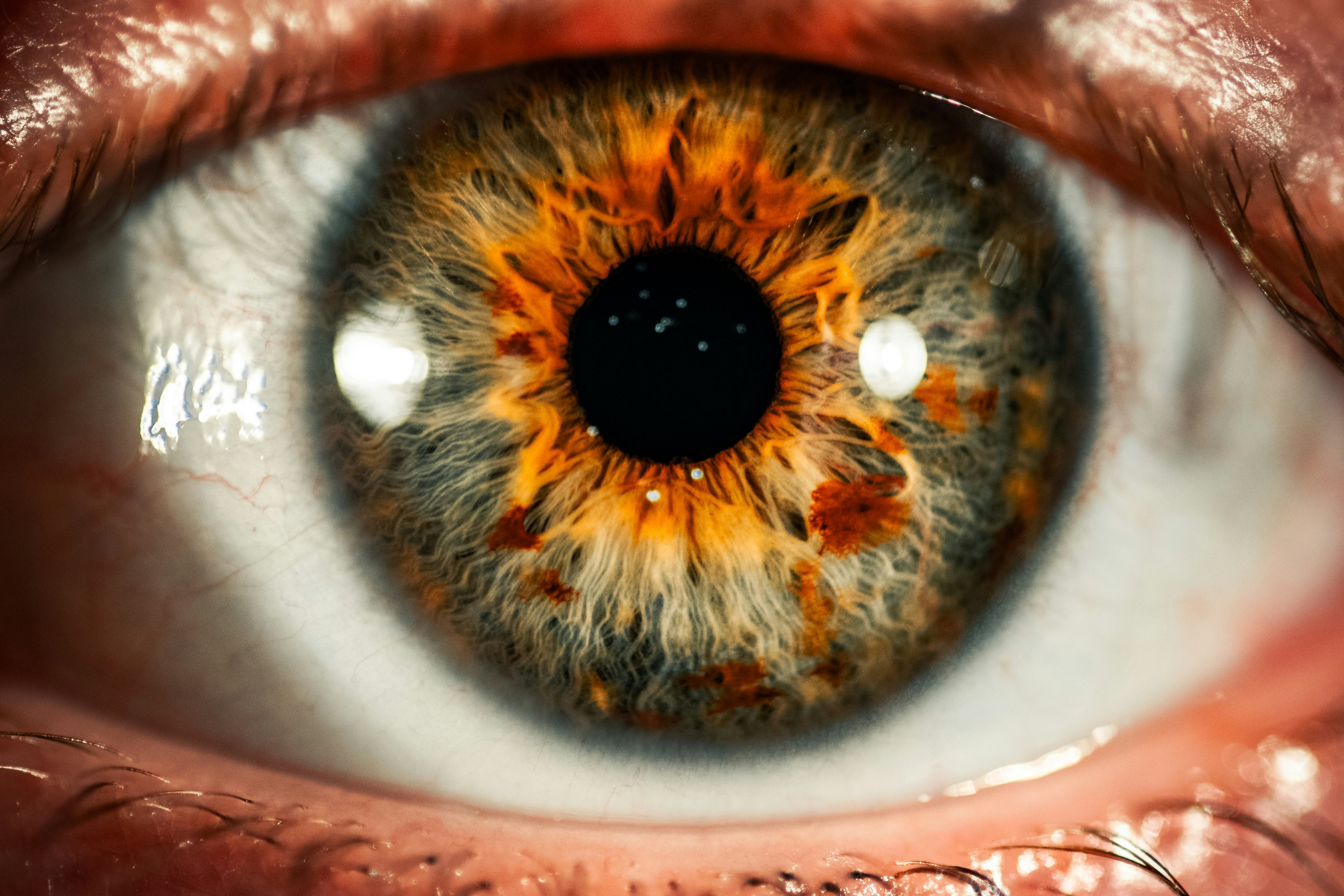
MScopic [em-skop-ik] is named for perspective.
Working with complex systems, particularly in health and wellbeing, requires the ability to zoom in, zoom out, and then zoom in again. Insight does not come from any single vantage point, but from understanding how interventions interact across organisational, market, and societal levels.
This movement across scale is not conceptual. It is essential for responsible decision-making in systems where actions have lasting and often irreversible consequences.


.jpg)
In our work, we examine three interconnected layers:
MicroScopic — the organisation
Where strategy, capability, and intervention design take shape.
MesoScopic — the market or ecosystem
Where incentives, standards, and competitive dynamics influence behaviour.
MacroScopic — the global view
Where culture, technology, and trust shape expectations over time.
Intervening at one level without understanding the others risks unintended outcomes.
A Critical Example | AI Companions in Health
The rise of AI companions as points of health-related inquiry illustrates this clearly.
At the micro level, organisations may see erosion of traditional engagement and education pathways, as individuals seek answers from AI systems before clinicians, providers, or brands.
At the meso level, questions emerge around who shapes these AI responses, whose data informs them, and how commercial incentives influence what is surfaced as “health advice.”
At the macro level, deeper ethical concerns arise. As access to healthcare remains constrained, AI risks becoming a substitute rather than a complement, shifting responsibility for care from systems to individuals, and normalising self-navigation of complex health decisions without adequate support or accountability.
What appears efficient at one level may be harmful at another.


.jpg)
From a futures perspective, we must hold detail and context together.
In health and wellbeing, this is less like interpreting a symptom at a single point in time and more like interpreting early clinical, lifestyle, and environmental indicators. A single metric rarely tells the full story; patterns over time matter more than isolated data points.
By observing repeatable behaviours, emerging norms, and structural constraints, we can reason about what is likely to follow — even when outcomes are not yet fully formed.
This does not produce certainty. It produces better judgment.
This requires deliberate movement across scale.
A zoom in allows us to identify a signal. A zoom out reveals what may have influenced it, what it connects to, and the conditions that made it possible. With this broader context, we can zoom in again back to a vantage point, better equipped to interpret what the signal may indicate about what comes next.
In health, this is the difference between observation and diagnosis.
An X-ray may reveal a fracture, but it does not explain why it occurred, how it interacts with the rest of the body, or what recovery should look like. Effective diagnosis requires understanding wider health factors — physiology, behaviour, environment — as well as the patient’s own goals and constraints. A treatment plan that ignores whether someone needs to work, care for family, or manage chronic conditions may be clinically sound, yet practically unworkable.
Decisioning requires both assessing the past while anticipating the future.
By examining what has already been created, repeatable behaviours, emerging norms, enabling technologies, and structural constraints, we can begin to reason about what has materialised so far. Understanding what shapes those behaviours matters: as we need to interpret how the future may be shaped by the connections between these signals helping define probable, possible, and plausible future scenarios.
We aim to support better decisions, ones that recognise context, trade-offs, and the lived realities of the systems we seek to influence.

.jpg)

.jpg)
MScopic exists to support leaders working in systems where complexity, ethics, and long-term impact are inseparable.
Our role is not to offer simple answers, but to help organisations develop the perspective needed to act responsibly — understanding how choices made today shape trust, behaviour, and system resilience tomorrow.
In health and wellbeing, perspective is not a luxury.
It is a responsibility.
Photo references (in order of appearance):
'Eye' by Colin Lloyd on Unsplash
'Network' by Alina Grubnyak on Unsplash
'Wave" by Pawel Czerwinski on Unsplash